Catcher Framing and MLB Props: Strikeout Adjustments
 Available in US
How Catcher Framing Affects MLB Strikeout Totals
For three seasons I evaluated pitcher strikeout props without once checking who was catching. Then I noticed a pattern I could not explain: the same pitcher, with the same stuff, was consistently recording more strikeouts with one catcher than another. The gap was not subtle — it was a full strikeout per game on average. The variable I had been ignoring was catcher framing, and it turned out to be one of the most underpriced inputs in the entire prop market.
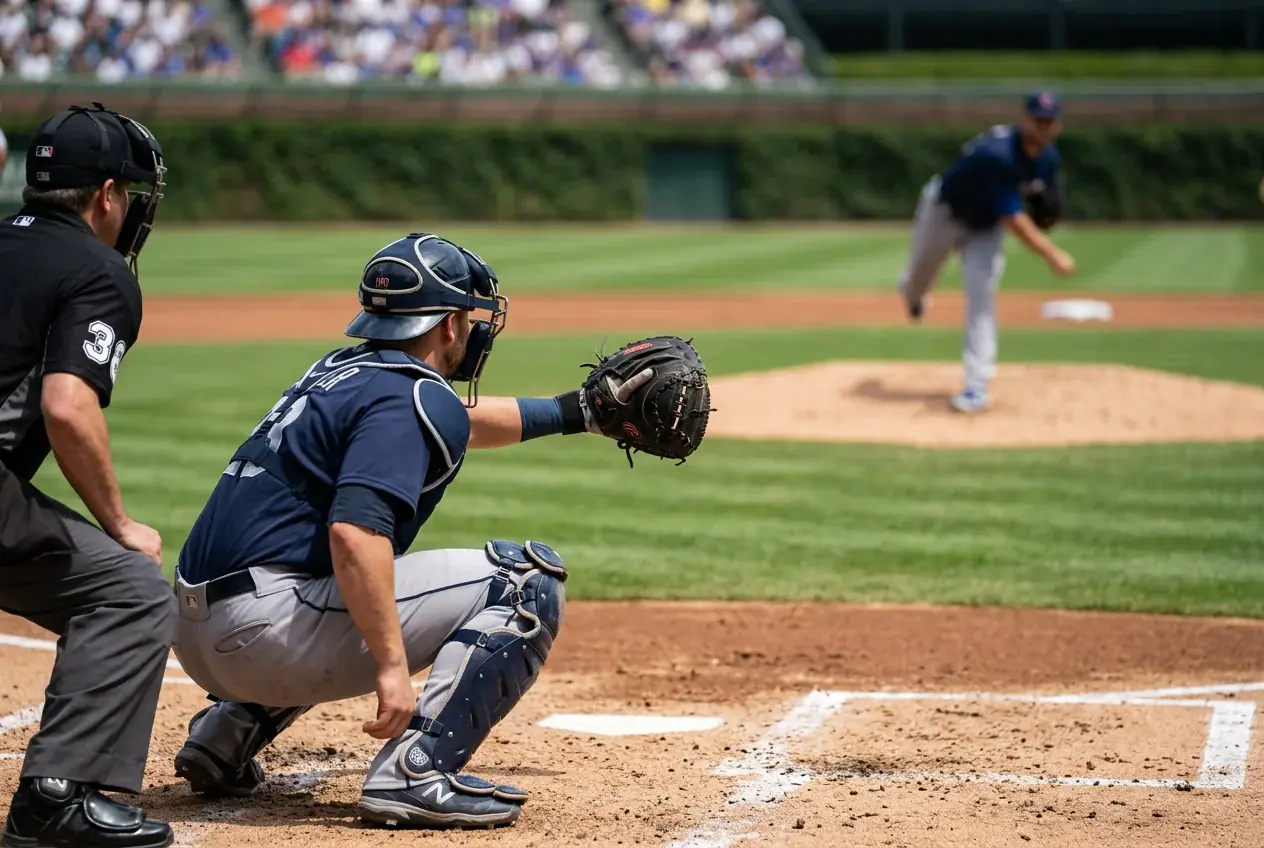
Catcher framing is the art of receiving a pitch in a way that influences the umpire’s ball-or-strike call. A skilled framer catches borderline pitches smoothly, presenting them within the zone even when they technically clip or miss the edge. A poor framer stabs at the ball, pulling his glove in a way that draws the umpire’s eye to the movement rather than the location. The difference is measured in fractions of an inch and fractions of a second, but the cumulative effect over a full game is measurable and significant.
Framing Runs and Called-Strike-Above-Expected
The primary metric for catcher framing is Called Strikes Above Average — also expressed as “framing runs,” which converts those extra called strikes into a run-value estimate. Baseball Savant publishes this data for every catcher in the league, updated daily.
An elite framing catcher might add 15-20 called strikes above average per 1,000 pitches received. At the other end, a poor framer might cost his pitching staff 10-15 called strikes per 1,000 pitches. The swing between the best and worst framers in the league is roughly 30 called strikes per 1,000 pitches — a gap that translates directly into strikeout and walk outcomes.
How does a called strike become a strikeout? Through count leverage. A borderline pitch that an elite framer converts into a called strike shifts the count in the pitcher’s favour — turning a 2-1 count into a 1-2 count, for example. Pitcher-friendly counts generate more swings and misses because the hitter is forced to protect the plate rather than waiting for his pitch. Each additional called strike cascades through the at-bat, increasing the probability of a strikeout. Over a full game with 130-150 pitches, the cumulative effect is substantial.
The reverse is equally true. A poor-framing catcher turns borderline strikes into balls, shifting counts in the hitter’s favour. The pitcher is forced to throw more pitches in the zone, hitters swing less defensively and the strikeout rate drops. It is not uncommon for a pitcher’s game-by-game strikeout totals to fluctuate by 1-2 strikeouts based solely on which catcher is behind the plate — a variation that dwarfs the typical line adjustment on a strikeout prop.
Quantifying Catcher Framing’s Impact on Pitcher Props
I ran a retrospective analysis on two full seasons of data, comparing pitcher strikeout rates when paired with top-quartile framers versus bottom-quartile framers. The average difference was 0.8 strikeouts per nine innings — a gap that sounds modest but translates to roughly half a strikeout per start for a pitcher who averages 5.2 innings. On a prop line set at 5.5, that half-strikeout shifts the probability meaningfully toward or away from the over.
The impact is largest for pitchers who work the edges of the zone. A power pitcher who lives in the heart of the plate and generates whiffs through pure velocity is less dependent on framing, because his strikeouts come on swings rather than called thirds. A finesse pitcher who relies on painting corners with his fastball and landing breaking balls at the bottom of the zone is heavily dependent on the catcher’s ability to present those borderline pitches as strikes. When a finesse pitcher is paired with an elite framer, his strikeout rate can spike by a full strikeout per game. When paired with a poor framer, it drops accordingly.
The practical application is straightforward: before placing a pitcher strikeout prop, check who is catching. The starting catcher is typically announced with the lineup card 90 minutes before game time. Cross-reference the catcher’s framing ranking on Baseball Savant with the pitcher’s style. If the pitcher works the edges and the catcher is an elite framer, the strikeout over gains value. If the catcher is a poor framer, the over becomes riskier regardless of the pitcher’s raw stuff.
Walk props respond to framing in the opposite direction. An elite framer suppresses walks by converting borderline pitches into called strikes, keeping the pitcher out of deep counts. A poor framer inflates walks by allowing those same pitches to be called balls, pushing counts to 3-1 and 3-2 where walks become more likely. If you bet pitcher walk totals — a growing market — catcher framing is arguably the single most important variable after the pitcher’s own command profile.
Where to Find Catcher Framing Data
The good news is that catcher framing data is free, publicly available and easy to incorporate into a daily prop-research routine. The investment is roughly five minutes per game, which is minimal relative to the edge it provides.
Baseball Savant publishes a catcher framing leaderboard that ranks every catcher by Called Strikes Above Average, framing runs and shadow-zone conversion rate. The shadow zone — the band of locations just inside and outside the edges of the strike zone — is where framing has its greatest impact. A catcher who converts a high percentage of shadow-zone pitches into called strikes is generating value for his pitching staff on every borderline delivery.
FanGraphs offers a complementary view with its catcher defence metrics, which include framing runs, blocking runs and throwing runs. The framing runs column isolates the value added or subtracted by the catcher’s receiving. FanGraphs also allows you to filter by date range, so you can check whether a catcher’s framing performance has been stable or has deteriorated over the current season — useful for identifying catchers whose framing may have regressed due to injury, fatigue or aging.
One nuance to watch for: backup catchers. Most teams have a regular starter behind the plate and a backup who plays once or twice per week. The backup’s framing metrics are often significantly worse than the starter’s, and when a scheduled rest day puts the backup behind the plate, the pitcher’s prop line may not adjust. This creates a predictable edge: identify days when a poor-framing backup is catching for a finesse pitcher, and lean toward the strikeout under. The reverse — an elite framer catching for a starter who usually works with the backup — favours the strikeout over.
Catcher framing is one of those variables that feels esoteric until you see its impact in your tracking data. I resisted incorporating it for years because it seemed too granular, too niche, too much effort for too little payoff. The data proved me wrong. A half-strikeout shift per game is not marginal — it is one of the largest single-variable effects in the strikeout prop market, and it is available to anyone willing to spend five minutes checking the lineup card.
How many additional strikeouts per game can an elite framing catcher add?
An elite framing catcher can add approximately 0.5 to 1.0 strikeouts per game for his pitcher compared to a poor-framing catcher, depending on the pitcher’s style. The effect is largest for finesse pitchers who work the edges of the zone, where framing converts borderline pitches into called strikes that shift counts in the pitcher’s favour and generate more swing-and-miss opportunities.
Do sportsbooks already account for catcher framing in their strikeout prop lines?
Most sportsbook models incorporate some measure of catcher quality, but the adjustment is typically based on season-long averages rather than game-specific pairings. When a backup catcher with significantly worse framing metrics replaces the regular starter, the prop line often does not fully adjust, creating a window of value on the strikeout under. Checking the lineup card 90 minutes before first pitch to confirm the catcher is a simple step that can reveal these mispriced lines.
Created by the ”mlb bet Props” editorial team.