MLB Parlay Hold Rate: Calculating the House Edge
 Available in US
Calculating the Hold Rate on MLB Parlays
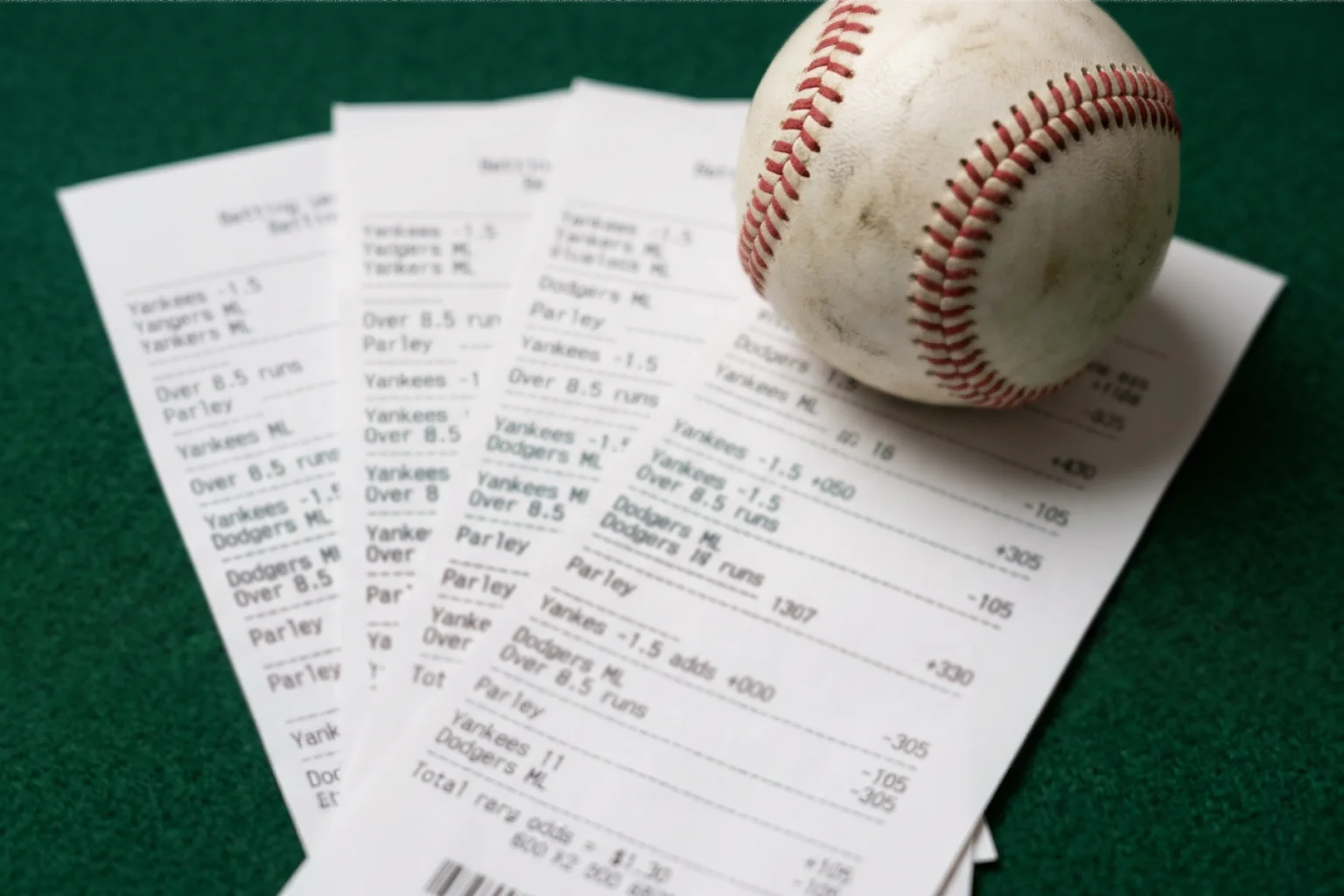
I placed my first MLB same-game parlay because the potential payout looked irresistible — three legs, familiar players, odds that screamed value. What I did not understand at the time was that the odds were not screaming value. They were screaming margin. The hold rate on that parlay — the percentage of my wager the sportsbook expected to keep — was roughly six times higher than if I had placed the same three selections as individual bets.
In New Jersey, parlays generate approximately 60% of online sportsbook revenue from sports betting despite representing a smaller share of total handle. That disproportion tells you everything about how profitable parlays are — for the house. Data from state regulators shows that parlays accounted for 24.4% of handle but 53.7% of gross revenue in a representative month, producing a gross win margin of 18.1%. On standard single bets, the hold rate sits around 4.5%. On same-game parlays, it ranges from 20% to 35%. The gap is the most important number in sports betting, and most bettors never see it.
How Hold Rate Compounds Across Parlay Legs
The mathematics behind parlay hold rates are straightforward, but the compounding effect is what makes them devastating for the bettor.
Every prop line carries a built-in vig — the sportsbook’s margin on each side of the bet. On a single prop, that vig might be 5%. When you combine two props into a parlay, the vigs do not simply add up — they multiply. The sportsbook prices each leg independently, including the vig on each one, and then combines the prices. The resulting parlay odds reflect the cumulative vig across all legs, which grows geometrically with each additional selection.
Consider a two-leg parlay where each leg has a vig of 5%. The combined implied probability exceeds the true combined probability by roughly 10% — but the actual hold rate is higher because the operator also adjusts the correlation pricing. On a same-game parlay, where the legs come from the same game and may be correlated, the operator adds an additional margin to account for the correlation — sometimes generously, sometimes punitively. The bettor has no visibility into how the operator prices correlation, which means the effective vig on an SGP is opaque in a way that single-bet vig is not.
By the time you reach a four-leg SGP, the cumulative hold rate can exceed 30%. That means for every 100 pounds wagered across a large sample of four-leg SGPs, the bettor expects to retain only 70 pounds in the long run. On a single bet at 4.5% hold, the same 100 pounds retains 95.50. The difference is staggering, and it is the primary reason that SGPs are the most profitable product in the sportsbook’s portfolio.
Singles vs Parlays: A Side-by-Side Edge Comparison
The appeal of parlays is the enhanced payout. A three-leg parlay at combined odds of 6.00 returns six times your stake if all three legs hit. The equivalent return from three separate single bets requires all three to win as well, but the effective odds are different because each single bet includes only its own vig rather than the compounded vig of the parlay.
Let me illustrate with a concrete example. Suppose you identify three MLB prop bets, each priced at 1.90 (implied probability: 52.6%). As singles, each bet carries a vig of roughly 4.8%. If all three are positive expected value at 1.90, your expected return on each is positive.
As a three-leg parlay, the combined odds would be approximately 6.86 (1.90 x 1.90 x 1.90). But the sportsbook does not offer 6.86 on the SGP — it offers something closer to 5.50 or 6.00 after applying the additional SGP margin. The gap between 6.86 (the fair parlay price based on individual odds) and 5.50 (the posted SGP price) is the operator’s additional hold. That gap represents a 20% reduction in expected payout, which the bettor absorbs entirely.
More than 80% of FanDuel users placed a parlay bet in one measured quarter, which tells you how effectively operators have marketed the product. The marketing emphasises the payout potential while obscuring the hold rate, creating a perception of value that does not survive mathematical scrutiny. 88% of pre-match bet builders on the Super Bowl contained a player prop, which demonstrates how deeply embedded the SGP habit has become in the betting public’s behaviour.
When a Parlay Can Still Be the Right Play
After everything I have written about hold rates, you might expect me to say “never bet parlays.” I do not say that, because there are specific circumstances where a parlay is defensible — but they are narrower than the industry wants you to believe.
The first is correlated legs. When two or more prop outcomes are positively correlated — meaning one hitting makes the other more likely to hit — the fair combined probability is higher than the product of the individual probabilities. If the sportsbook’s SGP engine does not fully price the correlation, the parlay can carry positive expected value even after the elevated hold rate. The classic example: a pitcher strikeout over combined with the opposing team’s run total under. If the pitcher dominates, he records strikeouts and suppresses runs simultaneously. The two legs are positively correlated, and if the operator underprices that correlation, the SGP is +EV despite the hold.
The second is entertainment value with controlled stakes. A one-pound SGP on a Friday night game is not a strategic investment — it is a ticket to enhanced engagement with a game you were going to watch anyway. At stakes that are genuinely immaterial to your bankroll, the hold rate is the price of entertainment, and it is a price many bettors are happy to pay. The danger arises when entertainment-level stakes creep upward and the SGP becomes a regular allocation from the bankroll rather than a discretionary indulgence.
The discipline I apply is simple: singles are for the bankroll, parlays are for pocket change. My serious prop bets — the ones backed by full analysis, bankroll-appropriate stakes and closing-line tracking — are always placed as singles. If I build an SGP, it is with money I have mentally written off, and it never exceeds 0.5% of my bankroll. That boundary keeps the hold rate from eroding the returns I have built through disciplined single-bet strategy.
Why is the hold rate on MLB prop parlays so much higher than on single bets?
The vig on each leg of a parlay compounds rather than simply adding up. A single bet might carry a 4.5% vig, but a three-leg parlay compounds that margin across all three selections, and the operator adds an additional SGP-specific margin for correlation pricing. The result is a hold rate of 20-35% on same-game parlays compared to roughly 4.5% on singles. The cumulative effect means the bettor retains significantly less expected value per pound wagered on parlays than on individual bets.
Can correlated legs in an SGP reduce the effective hold rate?
Correlated legs can improve the expected value of a parlay if the sportsbook’s pricing engine underestimates the positive correlation between outcomes. When two outcomes are genuinely linked — such as a dominant pitcher recording many strikeouts and the opposing team scoring few runs — the true combined probability is higher than the product of the individual probabilities. If the SGP price does not fully reflect this correlation, the parlay can be +EV despite the elevated hold rate. However, identifying genuine correlation that the book has underpriced requires careful analysis.
Created by the ”mlb bet Props” editorial team.